Protecting Your Security Infrastructure from Digital Threats
In an era where digital connectivity underpins every facet of business operations, the security of your surveillance systems has never been more critical. For South African businesses, the latest crime and cybersecurity statistics present a stark reality. The country is now the third most targeted nation for cyberattacks globally, with ransomware detections alone soaring to nearly 18,000 in the past year.

As surveillance technology evolves from standalone analogue systems to sophisticated, cloud-based IP networks, their vulnerability to digital threats grows in tandem. This is no longer a peripheral IT issue; it is a core business continuity and security concern that demands immediate attention.
For IT managers and security-conscious business leaders, the question is no longer whether your CCTV system is a target, but whether it is resilient enough to withstand an attack. As criminals become more technologically adept, they increasingly view surveillance systems not as a deterrent, but as a potential gateway for reconnaissance, disruption, or even a complete network breach. Protecting your security infrastructure is paramount, not only to safeguard physical assets but also to maintain the integrity of your entire digital ecosystem.
The Unseen Vulnerabilities in Your Surveillance Network
Many businesses invest heavily in high-definition cameras and advanced monitoring solutions, yet overlook the fundamental cybersecurity measures needed to protect them. This oversight creates significant vulnerabilities that can be easily exploited. One of the most common and easily rectified issues is the use of default passwords. Manufacturers ship devices with preset credentials, and failing to change these provides an open invitation to attackers. A recent spike in exploits targeting a well-known vulnerability in Hikvision cameras, some dating back as far as 2017, demonstrates that hackers are actively scanning for these basic weaknesses.
Another critical vulnerability lies in outdated firmware. Like any other software, the firmware on your cameras and recorders requires regular updates to patch security flaws. Unpatched systems, particularly older or “grey-market” imports that lack official support, remain susceptible to known exploits. This allows criminals to potentially disable security feeds before a robbery, extract sensitive video data, or use the surveillance system as a backdoor to infiltrate your broader corporate network.
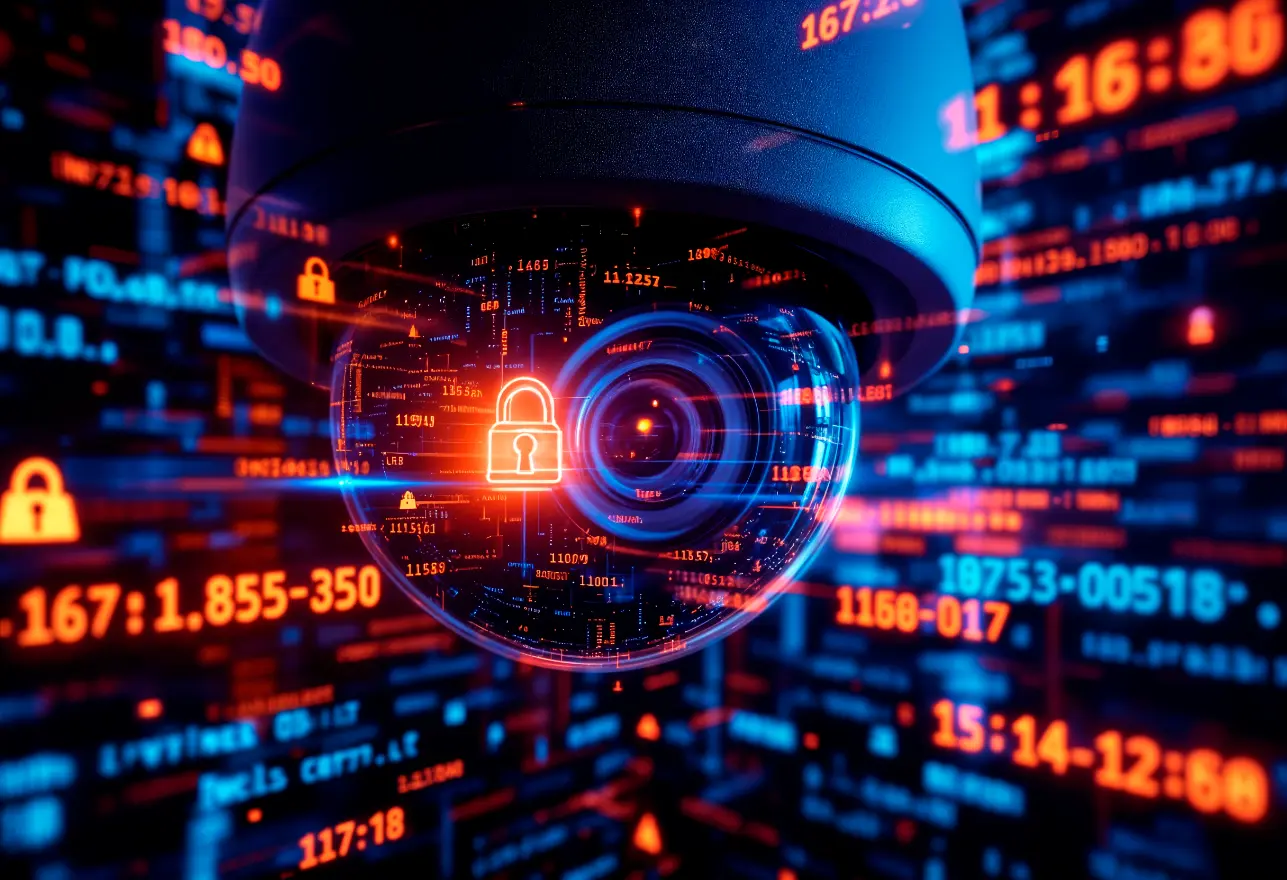
Furthermore, poor network segmentation creates an unnecessarily large attack surface. When CCTV systems share the same network as your primary business operations, a breach in one can easily cascade to the other. Without logical separation, such as through the use of Virtual LANs (VLANs), your entire network’s security is only as strong as its weakest link. A compromised camera could become a pivot point for a ransomware attack that cripples your entire organisation.
Building a Cyber-Resilient Surveillance Strategy
Protecting your CCTV infrastructure requires a multi-layered approach that combines robust technology with operational best practices. The foundation of this strategy is strong password management and network security. Enforcing a policy of creating unique, complex passwords for every device and changing them regularly is a simple yet powerful deterrent. This should be complemented by proper network segmentation, which isolates your surveillance traffic from other business-critical data. By creating a dedicated VLAN for your CCTV system, you contain potential threats and prevent them from spreading across your network.
Encryption and secure data transmission are equally vital. Unencrypted video footage can be intercepted and tampered with, rendering it useless for evidentiary purposes and creating a significant privacy breach. Modern IP camera systems should employ end-to-end encryption, securing data both in transit (as it travels across the network) and at rest (when it is stored on your recorders). This ensures that even if your network is compromised, the footage itself remains unreadable and secure.
At TTK Surveillance, we integrate these principles into our core service offerings. Our off-site CCTV monitoring solutions provide 24/7 surveillance from a secure, remote location, ensuring continuous oversight even if your on-site systems face power or connectivity issues. We ensure that all our installations, from high-definition CCTV systems to advanced access control and biometric solutions, are configured with cybersecurity best practices from the outset.
Compliance, Trust, and the Importance of POPIA
In South Africa, the cybersecurity of your CCTV system is not just a matter of best practice; it is a legal requirement. The Protection of Personal Information Act (POPIA) governs how personal data, which includes CCTV footage, is processed, stored, and protected. Non-compliance can result in severe penalties, including fines of up to R10 million or a significant percentage of your annual turnover.
POPIA mandates that organisations take reasonable technical and organisational measures to secure personal information. This includes protecting against unauthorised access and ensuring data is used only for its intended purpose. For businesses, this means having clear policies for data retention, access control, and the secure disposal of old footage. It also means being transparent with employees and customers about how their data is being collected and used, which is crucial for building and maintaining trust.
Choosing a security partner that understands these legal obligations is essential. TTK Surveillance provides POPIA-compliant data management systems and employs PSIRA-registered personnel trained in both technological and legal compliance. This ensures your surveillance operations not only meet regulatory standards but also uphold the privacy and trust of those you are monitoring.

The Path Forward: Audits, Updates, and Due Diligence
Cybersecurity is not a one-time fix but an ongoing process of vigilance and adaptation. Regular security audits and updates are essential to ensure your systems remain protected against evolving threats. This includes routinely checking for firmware updates, reviewing access logs for suspicious activity, and conducting penetration testing to identify and remediate vulnerabilities before they can be exploited.
Finally, choosing secure equipment and monitoring partners requires due diligence that extends beyond price and features. It is imperative to select vendors who prioritise security in their product development and provide ongoing support. Avoiding grey-market products and partnering with accredited, experienced providers like TTK Surveillance, who have over 20 years of industry experience, ensures you receive not only cutting-edge technology but also the expertise and support needed to maintain a truly secure and resilient surveillance infrastructure.
In the modern South African business landscape, a proactive approach to CCTV cybersecurity is non-negotiable. By implementing these best practices, you can transform your surveillance system from a potential liability into a robust and reliable asset that truly protects your organisation from both physical and digital threats.