In the ever-evolving landscape of security in South Africa, individuals and businesses alike are constantly seeking the most effective and efficient ways to protect their assets and ensure peace of mind.
The stark reality of crime statistics in our nation necessitates robust and innovative security solutions. While traditional manned guarding has long been the cornerstone of security, the advent of advanced technology has introduced a formidable alternative: virtual guarding.

This article will delve into a comprehensive comparison of these two distinct approaches, examining their respective advantages and disadvantages within the unique South African context, and highlighting how modern solutions, such as those offered by TTK Surveillance, are shaping the future of protection.
South Africa’s crime rates present a sobering picture. According to recent reports, housebreaking incidents affected 1.1 million households in the 2023/2024 financial year, representing 5.9 percent of all South African households . Furthermore, home robberies impacted 209,000 households through 263,000 separate incidents during the same period . These figures underscore the critical need for effective security measures, and the private security industry has seen significant growth in response. The number of registered private security personnel in South Africa has surged to 2.7 million, a more than five-fold increase since 2017 . This booming industry reflects a societal shift towards greater reliance on private security as police services struggle to contain rising crime .
TTK Surveillance, with over two decades of experience in the CCTV security industry, stands at the forefront of this evolution, offering cutting-edge solutions that integrate technology and expertise to provide comprehensive protection. Their off-site CCTV monitoring services, advanced access control systems, and vehicle recognition technology are examples of how virtual guarding is redefining security paradigms.
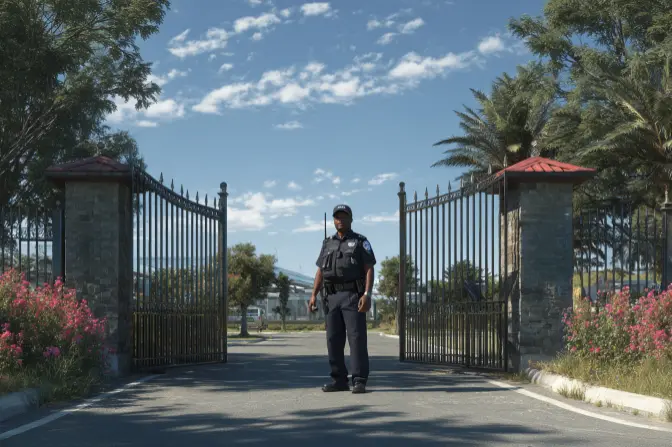
The Traditional Sentinel: Manned Security Guards
Manned security guards have been a ubiquitous presence in South African security for decades, offering a visible deterrent and a human element of response. Their role extends beyond mere observation to include physical patrolling, access control, and direct intervention when necessary.
Pros of Manned Security Guards:
- Visible Deterrent: The physical presence of a uniformed guard acts as a strong visual deterrent to potential criminals. This can be particularly effective in high-risk areas or at sensitive entry points.
- Immediate On-Site Response: In the event of an incident, a security guard can provide an immediate physical response, apprehending suspects, assisting victims, and coordinating with emergency services. This direct intervention capability is a significant advantage.
- Adaptability and Human Judgement: Guards can adapt to unforeseen circumstances, exercise discretion, and make on-the-spot decisions that automated systems cannot. They can handle complex social interactions, de-escalate situations, and respond to non-security related issues.
- Customer Service and Presence: In commercial or residential settings, guards can provide a sense of safety and offer assistance to residents, employees, or customers, contributing to a positive environment.
- Local Knowledge: Experienced guards often possess invaluable local knowledge of the area, including potential threats, common criminal tactics, and community dynamics.
Cons of Manned Security Guards:
- High Cost: The most significant disadvantage of manned guarding is the substantial cost associated with salaries, benefits, training, and equipment. This can be prohibitive for many businesses and residential estates, especially for 24/7 coverage.
- Human Error and Vulnerability: Guards are susceptible to human error, fatigue, distraction, and even collusion. They can be overwhelmed by multiple threats, or become targets themselves, as evidenced by the dangers faced by security personnel in South Africa’s high-crime environment.
- Limited Coverage: A single guard can only be in one place at a time, limiting their ability to monitor large areas effectively. This often necessitates multiple guards for comprehensive coverage, further increasing costs.
- Training and Consistency: The quality of manned guarding can vary significantly depending on the training and professionalism of individual guards and the security company. Ensuring consistent performance and adherence to protocols can be a challenge.
- Load-Shedding Impact: While guards are not directly reliant on electricity, their effectiveness can be hampered during load-shedding if electronic access control systems, lighting, and communication tools are compromised.

The Digital Guardian: Virtual Guarding
Virtual guarding, often referred to as off-site monitoring or remote surveillance, leverages advanced technology to provide security oversight from a centralised control room. This approach typically involves a network of high-definition CCTV cameras, intelligent analytics, and trained operators who monitor feeds and respond to alerts in real-time.
Pros of Virtual Guarding:
- Cost-Effectiveness: Virtual guarding offers a significantly more affordable alternative to manned guarding, as it eliminates many of the personnel-related expenses. This allows for broader and more consistent coverage at a fraction of the cost.
- 24/7 Uninterrupted Surveillance: Unlike human guards who require breaks and shift changes, virtual systems can provide continuous, round-the-clock monitoring without fatigue or lapses in attention. TTK Surveillance’s off-site CCTV monitoring services exemplify this 24/7 coverage .
- Enhanced Coverage and Scalability: A single virtual operator can monitor numerous cameras across a vast area, providing comprehensive coverage that would be impractical or prohibitively expensive with manned guards. Systems can be easily scaled up or down as security needs change.
- Proactive Threat Detection: Advanced video analytics can detect suspicious activities, such as loitering, perimeter breaches, or unusual movements, and trigger immediate alerts to operators. This allows for proactive intervention before an incident escalates.
- Reduced Human Risk: Virtual guards are not physically present on-site, eliminating the risk of direct confrontation with criminals and ensuring the safety of security personnel.
- Detailed Record Keeping: All surveillance footage is recorded, providing invaluable evidence for investigations, insurance claims, and legal proceedings. This detailed record-keeping is a significant advantage over human observation alone.
- Resilience to Load-Shedding: Reputable virtual guarding services, like those from TTK Surveillance, incorporate backup power systems to ensure continuous operation during load-shedding, mitigating a major vulnerability in the South African context .
Cons of Virtual Guarding:
- Lack of Physical Presence: The absence of a physical guard means there is no immediate on-site intervention in the event of a crime. Response relies on coordinating with armed response or law enforcement.
- Dependence on Technology: Virtual guarding is heavily reliant on technology. System malfunctions, network issues, or power outages (without adequate backup) can compromise security. However, as noted, leading providers like TTK Surveillance address this with robust infrastructure.
- Limited Human Interaction: Virtual guards cannot provide the same level of customer service or direct assistance as a physical guard. They cannot de-escalate social situations or respond to non-security related queries.
- False Alarms: While advanced analytics reduce false alarms, they can still occur, leading to unnecessary dispatches of armed response units.
- Installation and Maintenance Costs: Initial setup costs for high-quality CCTV systems, analytics software, and network infrastructure can be substantial. Ongoing maintenance and software updates are also necessary.
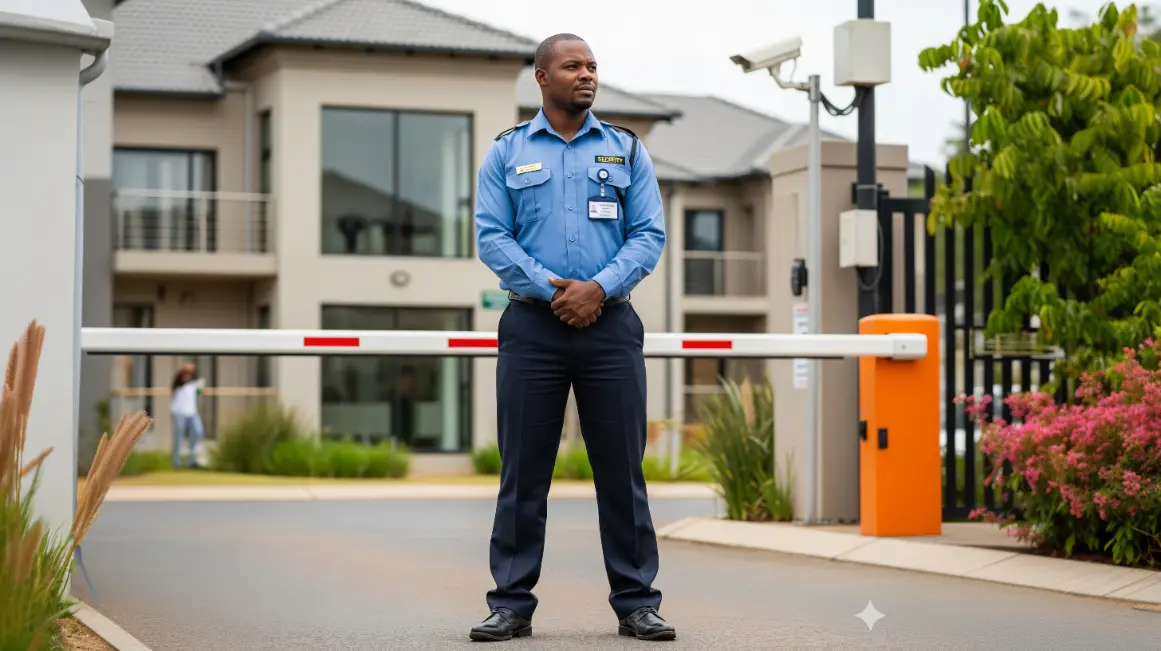
The Hybrid Approach: Blending the Best of Both Worlds
In many South African security scenarios, the most effective solution is often a hybrid approach that combines the strengths of both manned security guards and virtual guarding. This integrated strategy leverages technology for comprehensive monitoring and early detection, while retaining the human element for immediate response and nuanced decision-making.
For instance, a residential estate might utilise TTK Surveillance’s off-site CCTV monitoring for 24/7 perimeter surveillance and access control, with intelligent analytics flagging suspicious activity. This allows a smaller team of on-site security guards to focus on responding to verified threats, conducting patrols in high-risk areas, and managing visitor access with a more informed and targeted approach. TTK Surveillance’s expertise in advanced access control systems, including biometric verification and ANPR (Automatic Number Plate Recognition), further enhances this integrated security posture, providing automated and secure entry points that reduce the burden on physical guards .
This blended model offers a cost-effective yet highly secure solution, optimising resources and maximising protection. The virtual component provides the ‘eyes’ and ‘ears’ across a wide area, while the physical guards provide the ‘hands’ and ‘feet’ for on-the-ground action.
Conclusion
The choice between security guards and virtual guards in South Africa is not a simple either/or proposition. Both offer distinct advantages and disadvantages. Traditional manned guarding provides a visible deterrent and immediate physical response, but comes at a significant cost and with inherent human vulnerabilities. Virtual guarding, on the other hand, offers cost-effectiveness, continuous surveillance, and enhanced coverage through advanced technology, but lacks a physical presence for immediate intervention.
Given the unique security challenges faced in South Africa, including high crime rates and infrastructure vulnerabilities like load-shedding, a hybrid approach often emerges as the most pragmatic and effective solution. By integrating the technological prowess of virtual guarding with the strategic deployment of manned security personnel, individuals and organisations can achieve a comprehensive, resilient, and cost-efficient security posture. Companies like TTK Surveillance are pivotal in providing these integrated solutions, ensuring that South Africans can navigate their daily lives with greater safety and peace of mind.