In South Africa, every security decision matters. For business office parks, security is not simply a background facilities issue. It affects tenant confidence, staff wellbeing, daily operations, and the long-term value of the property. When the wrong security model is in place, the damage goes well beyond a stolen laptop or a broken gate motor. It also brings disruption, repair costs, insurance complications, reputational harm, and a gradual loss of confidence from the businesses that work there every day.
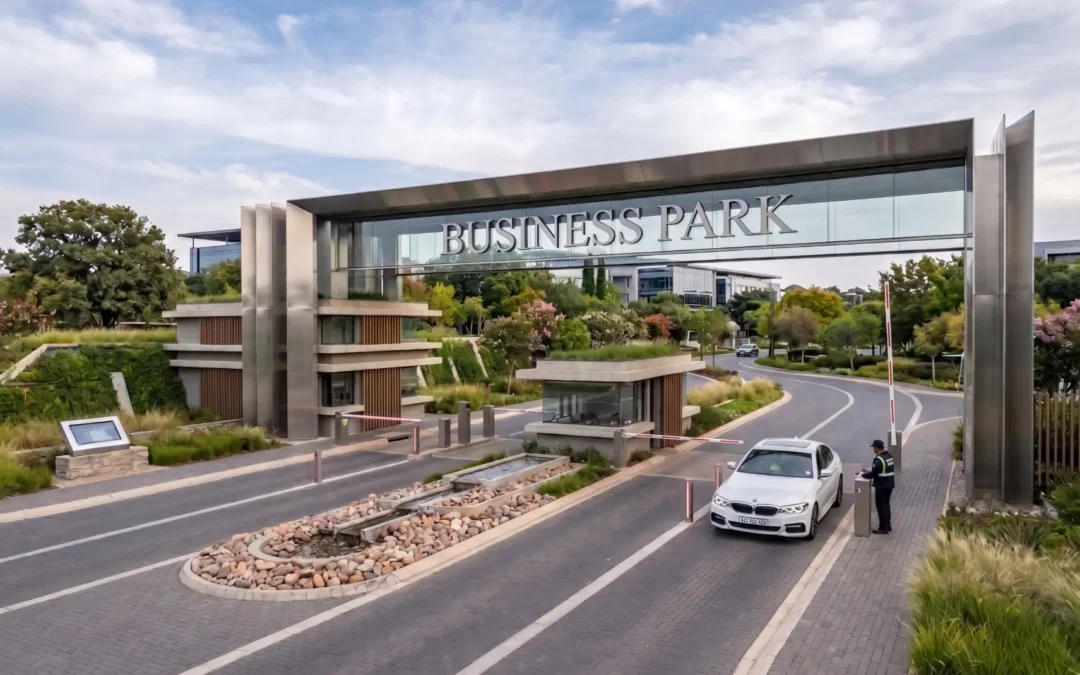
That is what makes office parks such a distinctive and often underestimated security environment. Unlike a stand-alone warehouse, a private home, or a single retail site, a business office park is built around constant movement. Employees arrive in waves. Visitors come and go throughout the day. Couriers need quick access.
Contractors, cleaners, and maintenance providers move between buildings carrying tools, stock, or equipment. The property has to remain professional, welcoming, and easy to navigate, yet it also has to stay controlled. That tension between convenience and protection is where many office parks become vulnerable.
The weak points are usually easy to recognise. Multiple entrances and shared common areas create more opportunities for tailgating and unauthorised access. Reception teams are expected to be efficient and friendly, yet they also act as the first screening point for unfamiliar people. Visitor and contractor traffic adds another layer of risk because temporary users are harder to verify consistently, especially when offices, service corridors, parking areas, and tenant suites are spread across a large site. Open or semi-open parking increases exposure even further because vehicles, personal belongings, and access routes are often located in spaces that feel public or loosely supervised. Then there is the after-hours problem. Once the working day ends, office parks become quieter and suspicious movement is far easier to miss if the site is not actively watched.
The Double-Cost of Crime: Analysing the Economic and Reputational Toll
Recent South African crime figures show why this cannot be treated lightly. SAPS recorded 75,591 property-related crimes nationally in the third quarter of the 2025/26 financial year, covering October to December 2025. In the same quarter, theft of motor vehicles and motorcycles reached 7,477 incidents. For office parks, those numbers matter because property-related crime includes offences that overlap directly with the way these properties function, including burglary at non-residential premises, theft of vehicles, and theft out of or from vehicles. Office parks combine buildings, parking bays, service yards, access gates, and a steady flow of unfamiliar people. That means they carry elements of commercial property risk, vehicle risk, and visitor-management risk all at once.
Even when national figures improve in some categories, owners and management companies should not assume that the danger has passed. A statistical decrease does not automatically create a real sense of safety. In office parks, even one serious incident can have an outsized effect. A single intrusion can lead to lost equipment, damaged infrastructure, tenant downtime, emergency callouts, insurance claims, and difficult conversations with occupiers who expect a secure environment as part of the rental value they are paying for.
The cost of this insecurity is not theoretical. The World Bank has estimated that the annual impact of crime on firms in South Africa is around 6.5% of GDP when direct losses and prevention costs are combined. It has also estimated the total cost of crime at roughly 10% of GDP a year, with protection costs such as security and insurance accounting for about 4.2% of GDP. That tells landlords, property owners, and management teams something very clear. South African businesses are often paying for crime twice. First, they spend money trying to prevent it. Then, if the system is weak or fragmented, they pay again through loss, interruption, repair, and recovery.
For business office parks, that burden is spread across several layers. Tenants absorb lost productivity and business interruption. Owners and managers absorb repairs, system upgrades, and the reputational consequences of repeated incidents. Management companies spend time dealing with reports, contractor coordination, insurer queries, and tenant complaints. In some cases, the longer-term cost is even more damaging than the immediate loss. A property that develops a reputation for weak access control, poor visitor screening, or repeated vehicle incidents can become less attractive to both existing tenants and prospective occupiers. Security is no longer a hidden operating expense. In many office parks, it has become part of the commercial proposition.
Visual Vigilance: Pairing High-Definition CCTV with Off-Site Monitoring
This is why office park security cannot rely on one measure alone. A camera on its own is not enough. A guard on his own is not enough. A boom gate on its own is not enough. These properties need a layered strategy built around how people actually use the site. Based on TTK Surveillance’s current service offering, the strongest fit for a South African business office park would usually be a combination of high-definition CCTV systems, 24/7 off-site CCTV monitoring, access control, biometric verification, and ANPR for vehicle management and gate intelligence. Each of these solutions addresses a different weakness, and together they create a much stronger overall response.
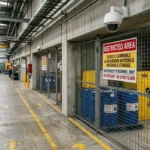
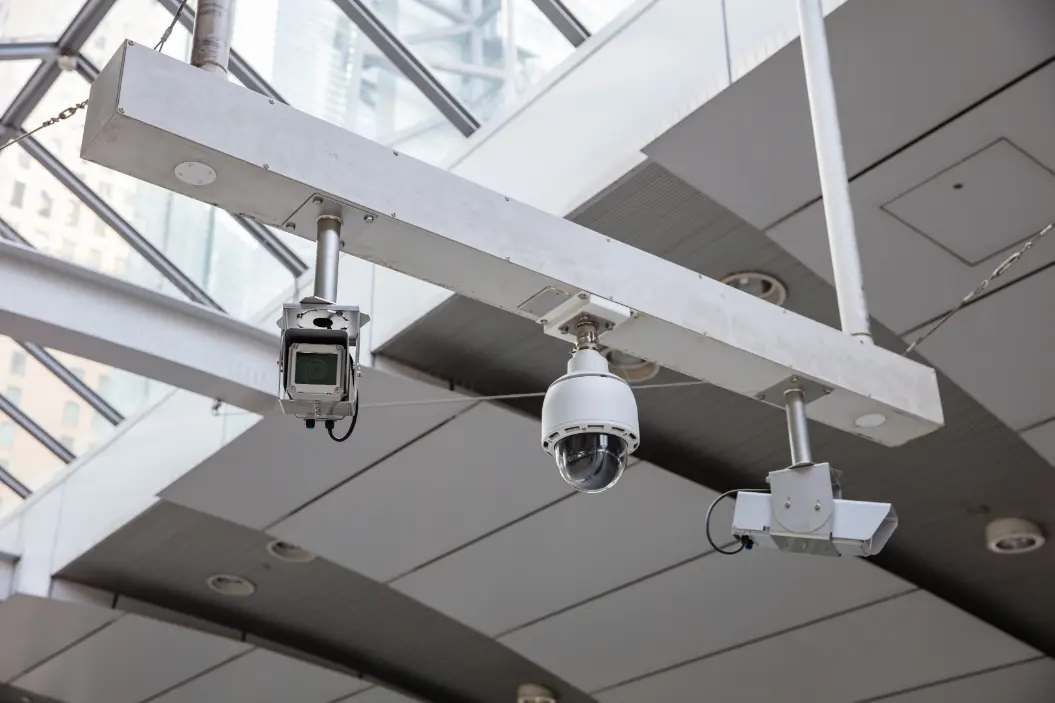
High-definition CCTV remains the visual backbone of a modern office park system. Clear footage matters because it improves both live visibility and post-incident investigation. Poor-quality video may confirm that something happened, but it often fails to show who was involved, how they moved through the property, or which vehicle was used. Good-quality coverage of entrances, exits, common areas, loading points, parking bays, and perimeter zones makes it far easier to identify suspicious behaviour before it turns into something more serious.
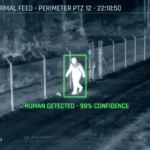
But many properties stop too early. They install cameras, assume the site is secure, and only review footage after something has gone wrong. For office parks, that is a costly mistake. CCTV becomes much more effective when it is paired with off-site monitoring. This is one of the clearest areas where TTK Surveillance’s model is relevant. Off-site CCTV monitoring adds a live response layer to the property. Instead of relying only on recorded evidence, the site benefits from continuous observation, active detection, and faster escalation when unusual activity is identified.
Smart Movement: The Role of Biometrics and ANPR in Access Control
Access control is just as important because office park risk is not only about who enters the property. It is also about where people can go once they are inside. Many incidents happen because a person who had some level of legitimate access is then able to move too freely through the site. Employees, visitors, delivery staff, and contractors should not all have the same permissions. A good access-control system helps separate public zones from tenant-only areas, service routes from office space, and daytime access from after-hours restrictions.
The Hybrid Guarding Model: Merging Human Presence with Virtual Reach
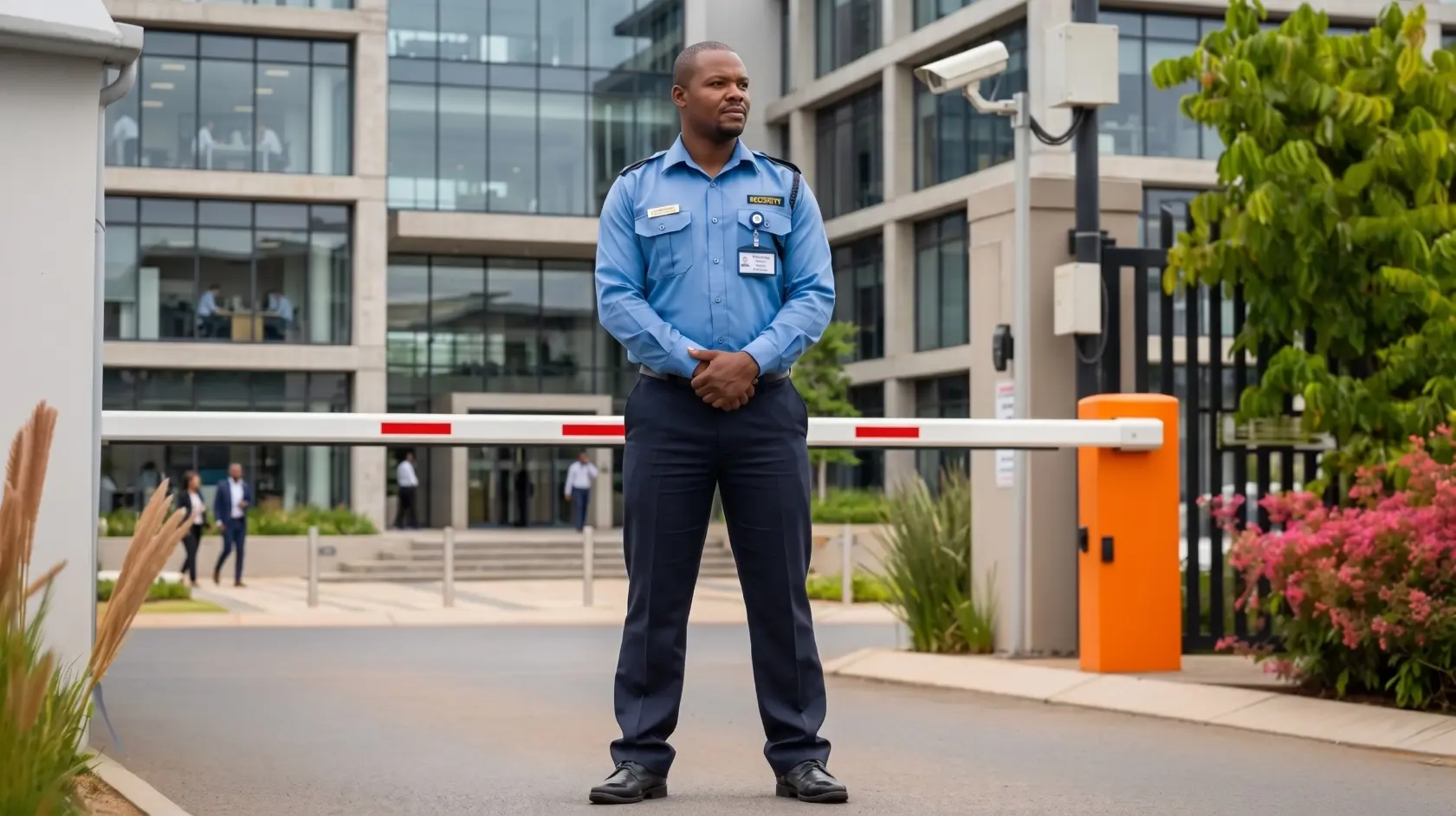
The comparison between physical guarding and virtual guarding is also critical. Physical guards still matter. They provide visible deterrence, assist visitors, perform patrols, and respond on the ground when something happens. For many office parks, they remain essential. Yet physical guarding alone has limits. A guard cannot watch reception, the basement, the service gate, and the perimeter at the same time. Long shifts create fatigue, and familiar routines can lead to blind spots.
Virtual guarding, through off-site CCTV monitoring, brings a different set of strengths. It supports continuous observation across multiple areas, creates a digital audit trail, and improves early detection in quieter parts of the park. It is particularly effective in parking zones, perimeter sections, service passages, and after-hours periods when human traffic drops. That does not mean physical guarding should be replaced completely. In most South African office parks, the best answer is a blend of the two. Physical guards provide presence and intervention. Virtual guarding adds consistency, reach, and a more intelligent view of the entire site.
Just as importantly, this blended approach helps solve the access-versus-convenience problem. Approved tenants and employees should not feel punished by slow, outdated systems. Visitors should not move through the property unchecked. Contractors should not be able to use operational complexity as cover for weak supervision. A coordinated mix of ANPR, biometrics, access control, high-definition CCTV, and off-site monitoring allows the park to make authorised access smoother while making risky access much harder.
From Audit to Action: Designing a Proactive Security Ecosystem
For owners and management companies, the smartest starting point is not to buy more technology blindly. It is to begin with a proper security audit. That is another area where TTK Surveillance’s service approach fits the needs of office parks well. Before extra cameras, guards, or gate systems are added, management needs to understand the real blind spots, visitor-control weaknesses, contractor risks, parking vulnerabilities, and after-hours response gaps shaping exposure on the site.
In South Africa, office park security needs more than a guard at the gate and a few cameras on the wall. It needs a deliberate strategy built around how people move, how criminals exploit routine, and how the right combination of technology and monitoring can protect both convenience and control. When security is designed properly, it does not simply record incidents after they happen. It helps prevent them in the first place.