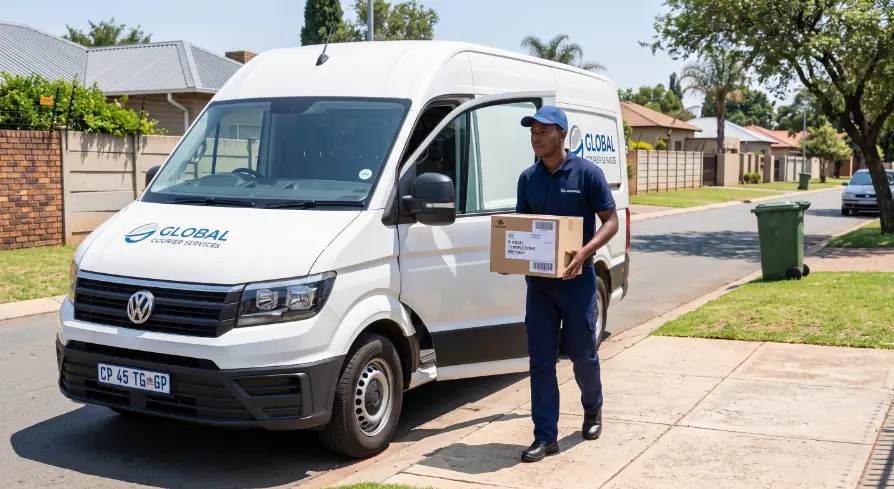
The rapid expansion of South Africa’s e-commerce market, which reached seventy-one billion rand in 2023 and is projected to exceed one hundred billion rand by 2026, has fundamentally transformed the logistics landscape.
While this digital boom brings immense commercial opportunity, it has also placed a massive target on the backs of courier and delivery companies. South Africa’s transport and logistics sector, which contributes up to ten percent of national gross domestic product and employs over a million people, is facing a severe and highly coordinated security crisis on the roads.
As delivery vehicles carry increasingly high-value, fast-moving consumer goods directly to businesses and residential doorsteps, traditional, reactive security measures are no longer sufficient to protect drivers, vehicles, and cargo.

To survive and thrive in this high-risk environment, South African courier operators must transition from isolated physical security controls to proactive, technology-driven ecosystems. The most powerful tools in this modern arsenal are mobile truck cameras and 24/7 offsite surveillance. By integrating vehicle-mounted intelligence with real-time, remote monitoring, logistics companies can deter crime, protect their workforce, and significantly reduce operational losses.
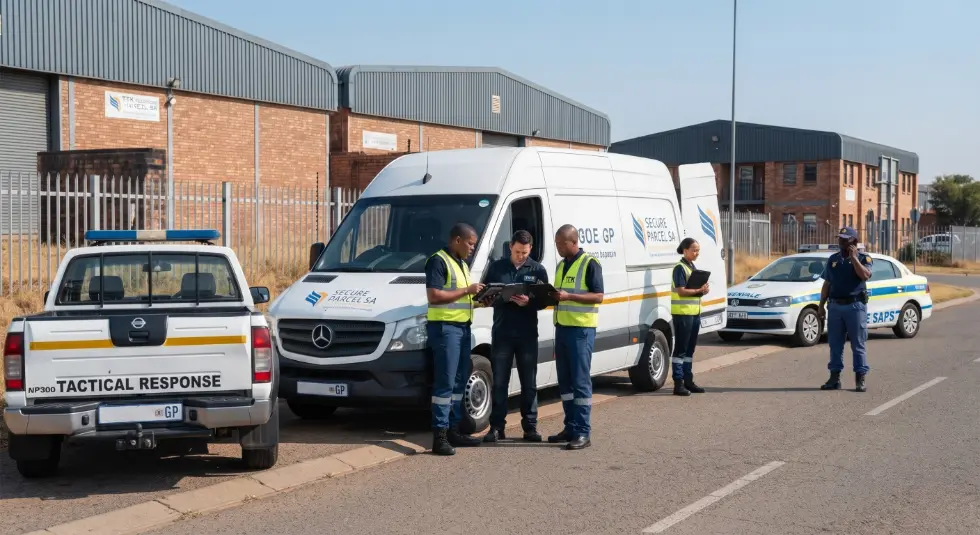
The Stark Reality of South African Cargo and Fleet Crime
The scale of vehicle-related crime in South Africa is staggering, with logistics fleets bearing the brunt of the onslaught. According to the latest South African Police Service quarterly crime statistics released in May 2026, police recorded 4,420 carjackings nationally between January and March 2026 alone. This equates to approximately forty-eight vehicles hijacked every single day across the country. While this represents a marginal year-on-year decline, industry bodies such as the Road Freight Association warn that the real figure is significantly higher due to persistent under-reporting, estimating that nearly a quarter of all hijackings go unreported to authorities.
For commercial operators, the risk is even more acute. Although truck hijackings officially dropped by over twenty-one percent in the first quarter of 2026, Gauteng remains the national epicentre of cargo crime, accounting for approximately sixty-four percent of all truck hijackings. High-risk transit corridors such as the N1, N3, N12, and N17 feature constantly in police intelligence.
The financial consequences of these crimes are devastating. Data from the Transported Asset Protection Association Europe, Middle East and Africa regional database recorded 2,670 cargo theft incidents across South Africa over an eighteen-month monitoring period, resulting in direct losses of approximately R577 million. Strikingly, because only a tiny fraction of these recorded crimes reported their actual financial value, the true cost of cargo theft to the economy is exponentially higher. Major incidents involving goods worth R1.8 million or more averaged a staggering R18.3 million per crime, including massive losses of clothing, electronics, and high-value industrial materials.
The Evolution of Syndicate Tactics
Cargo theft is no longer a crime of opportunity. It is driven by highly sophisticated, well-funded, and professional syndicates. The South African Police Service statistics reveal that organised crime syndicates now drive over fifty-seven percent of all carjackings and nearly half of all cash-in-transit robberies. These syndicates employ advanced tactics designed to bypass standard security protocols.
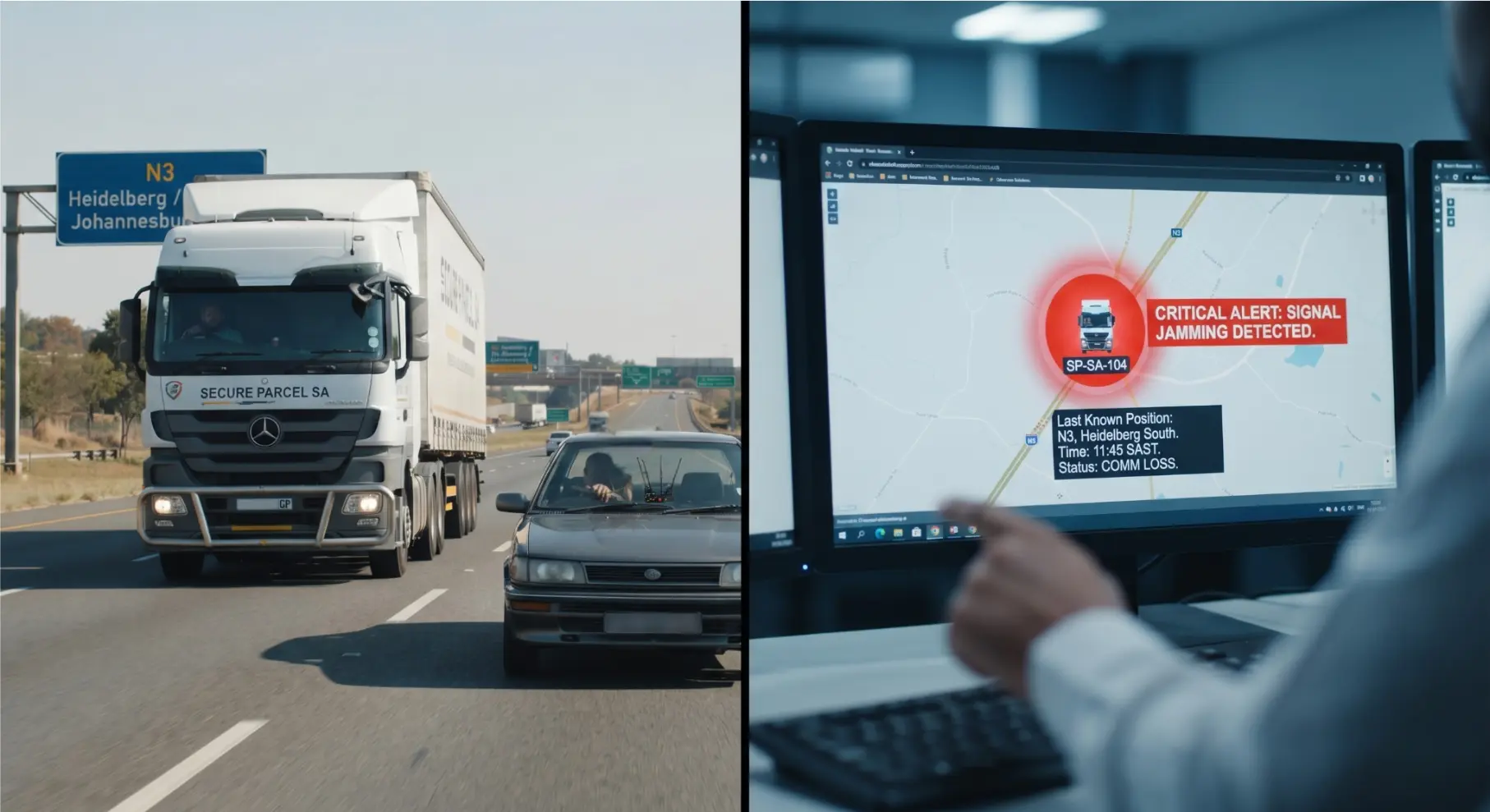
A primary method is the deployment of GPS-jamming technology. Criminals use signal jammers to block the radio frequencies used by standard vehicle tracking units, effectively blinding the fleet manager’s control room in seconds. This creates a critical blind spot, allowing the hijackers to divert the vehicle to a stripping location before an alarm can be raised.
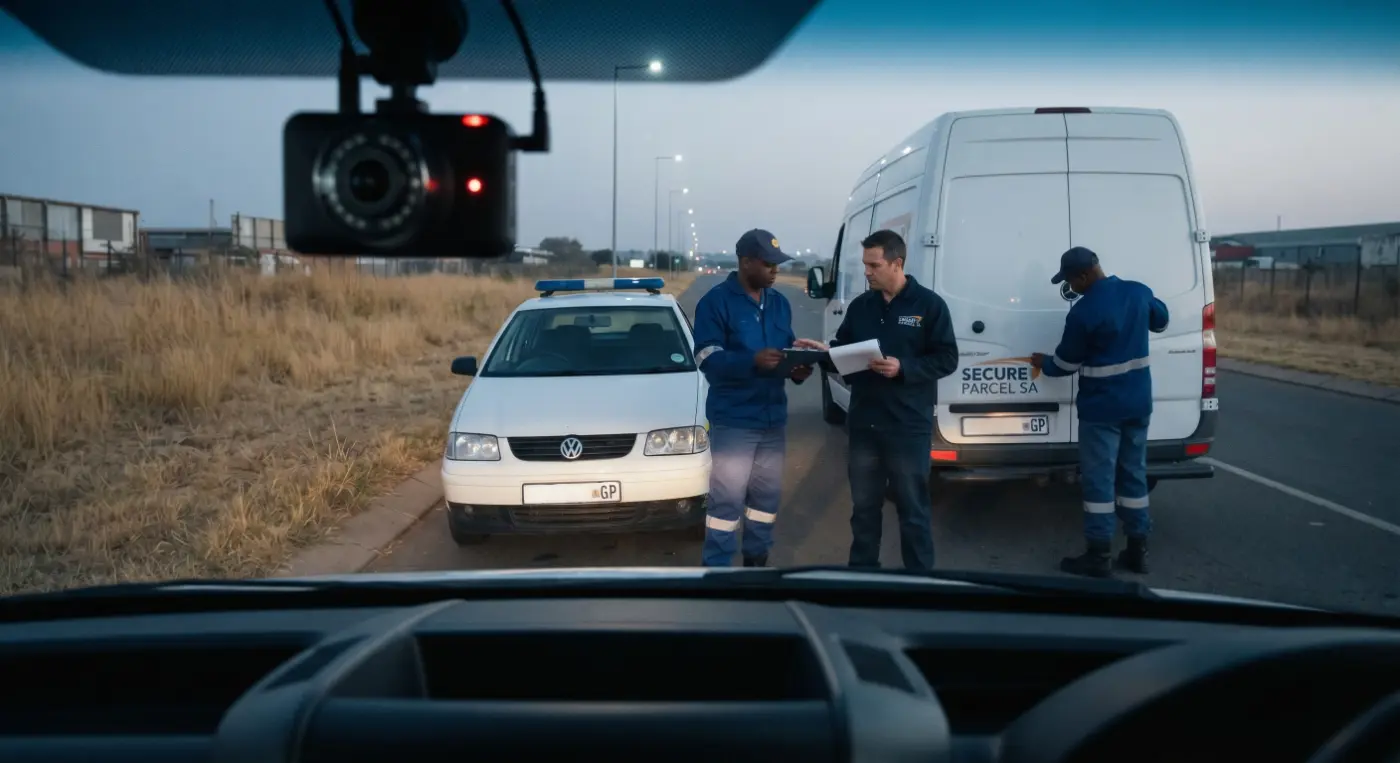
Furthermore, syndicates frequently use cloned police vehicles equipped with blue lights to conduct fake law enforcement stops, forcing drivers to pull over in seemingly safe areas. This physical threat is compounded by insider collusion, where compromised employees leak dispatch schedules, routes, and high-value cargo details to criminals, and cyber-enabled theft, where hackers breach logistics platforms to manipulate delivery instructions.
The threat is not confined to heavy long-haul trucks. Smaller delivery bakkies and light commercial vehicles are increasingly targeted during the vulnerable “last mile” of delivery. In May 2026, a courier vehicle was intercepted by an armed gang in Giyani, Limpopo, where the drivers were held at gunpoint, forced into nearby bushes, and robbed of packages worth twenty thousand rand. Similarly, the explosive growth of motorcycle delivery services has seen a twenty percent surge in bike hijackings, with criminals frequently luring riders to isolated locations using fake orders.
Proactive Defence: Mobile Truck Cameras and Offsite Surveillance
To counter these advanced threats, courier companies must move away from basic, passive GPS tracking. The modern solution lies in combining mobile truck cameras with intelligent offsite surveillance.
Mobile truck cameras, or in-vehicle surveillance systems, act as a continuous, unblinking witness on the road. These dual-facing, high-definition dashcams monitor both the external road ahead and the internal driver cabin. Unlike standard cameras, modern mobile surveillance systems utilise artificial intelligence to detect driver fatigue, distraction, and distress. In the event of an incident, the camera automatically uploads critical footage to a secure cloud platform, ensuring that evidence is preserved even if the physical hardware is damaged or stolen.
However, cameras are only as effective as the monitoring infrastructure behind them. This is where 24/7 offsite surveillance becomes a game-changer. By routing live video feeds and telematics data to a professional, offsite control room, courier companies can implement proactive security.
Rather than relying on a driver to press a panic button under extreme duress, intelligent software monitors the vehicle’s telemetry. If a GPS-jamming attempt is detected, if the vehicle deviates from its geofenced route, or if the cargo doors are opened outside an approved delivery zone, the system triggers an immediate, silent alert in the Edenvale-based control room of TTK Surveillance. Professional operators can instantly access the live camera feeds, assess the situation, and coordinate a rapid response with tactical security teams and the police, compressing the recovery window from days to minutes.
Investing in these advanced, proactive technologies is no longer just an operational upgrade; it is an essential strategy to protect your drivers, secure your cargo, and safeguard your business’s bottom line.